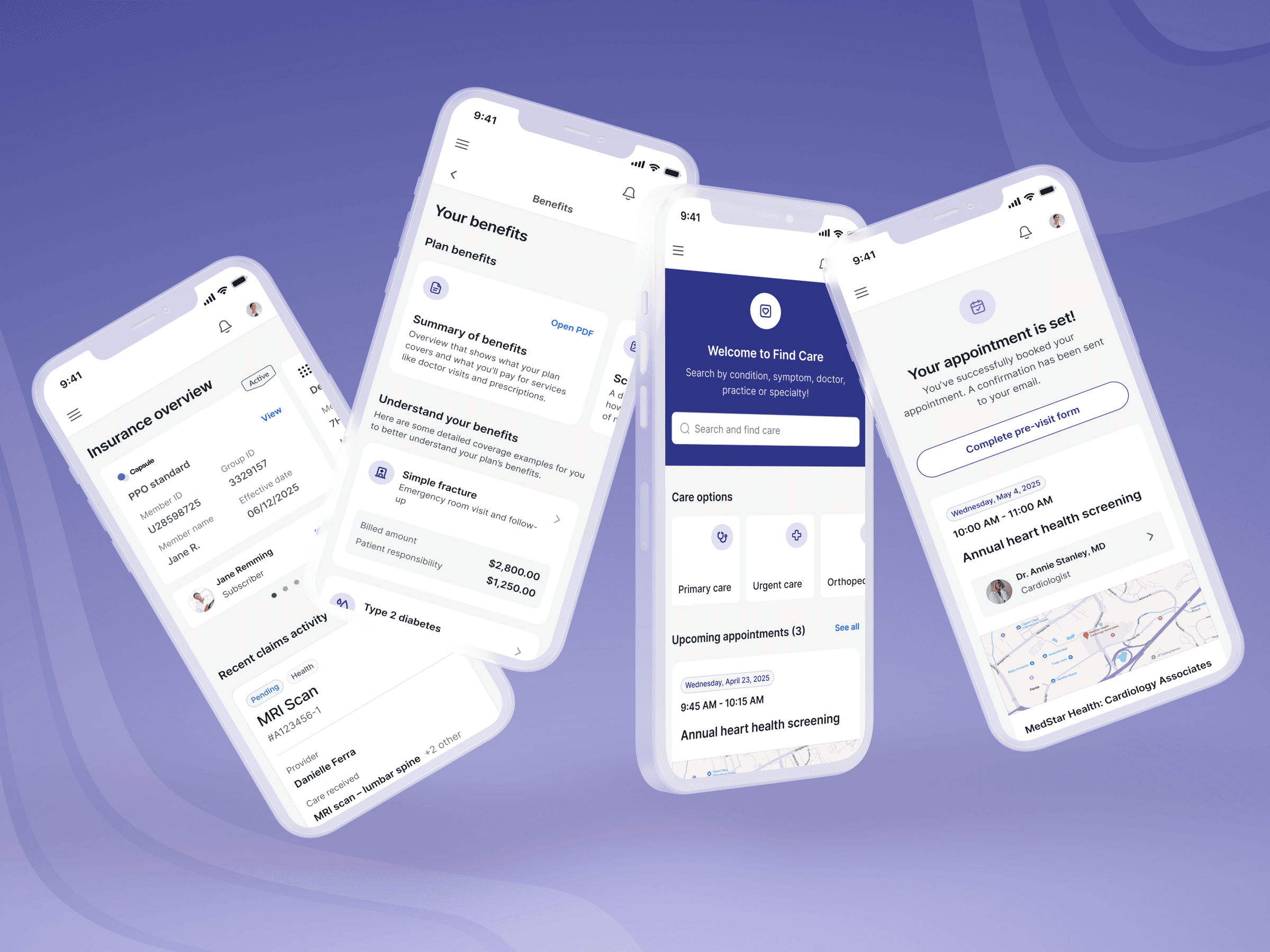
Payup
Faster pay for the service economy. How a one-page idea became the payments infrastructure behind property management, scaling from $0 to $1M ARR in two years.
COMPANY STAGE
Venture Funded
SERVICE PROVIDED
Edge build
TIMELINE
12 Weeks
The hidden cost of slow payments
The service economy runs on a broken promise: do the work now, get paid much later. Vendors in property management, construction, and trucking routinely wait 30 to 90 days for work they've already finished, and roughly two-thirds of them need that money sooner than their customers are willing to release it. The financing meant to close that gap only added friction (credit checks, long applications, and fresh debt on the vendor's balance sheet), and with around 41% of B2B payments still arriving by paper check, the wait often stretched further. The money was never missing from the system. It just moved slowly, opaquely, and on terms that favored everyone except the people doing the work.
Monico was involved with PayUp from Day 1: validating the problem, mapping the workflows behind late payments, and pressure-testing what would actually change outcomes for vendors. That discovery led to the insight the product was built around: solve the problem at its source by helping businesses manage payables, then give vendors control over how and when they get paid. The result was a B2B2C model. PayUp served the businesses that pay vendors as an accounts payable and receivable manager, and through them reached the vendors, who could choose how fast (Net 0 to Net 90) and how (instant, ACH, eCheck, or physical check) they got paid.
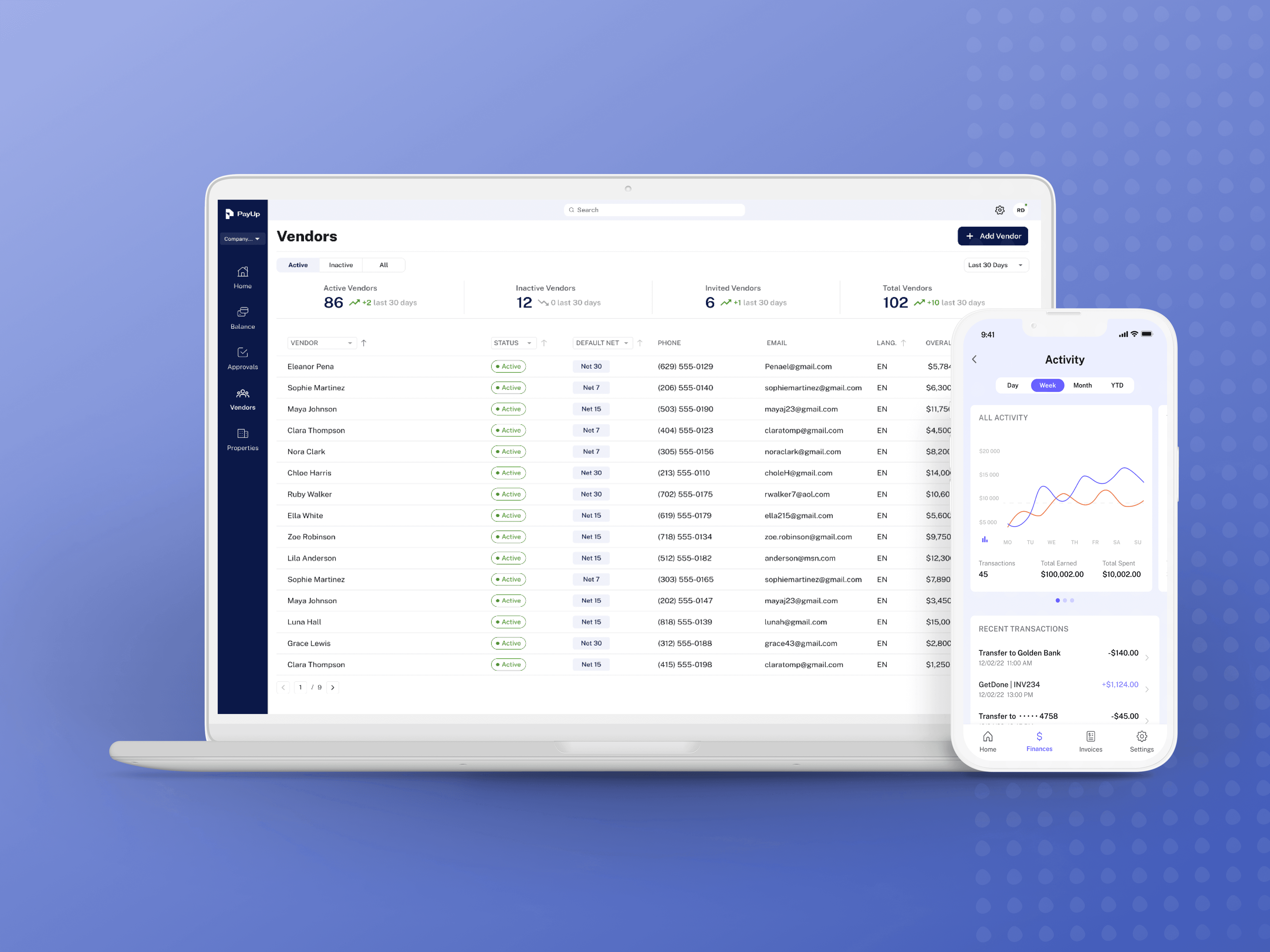
A dashboard for businesses
Before PayUp, the businesses paying vendors lived in a patchwork of checks, ACH transfers, and spreadsheets, with no single source of truth for what was owed, paid, or stuck. Cutting checks and chasing down payment status was manual, slow, and easy to get wrong. Monico designed a dashboard that brought invoices, vendors, properties, and payments into one place, trading that grind for automated, routed payouts and a clear, real-time view of what's paid, pending, or failed. For the first time, finance teams could see every vendor payment across every rail in a single view and trust that the money had actually moved.

A vendor mobile app
For the vendor, the old reality was waiting 30 to 90 days for work already finished, with no visibility into when payment would land and no way to speed it up that didn't mean a credit check and fresh debt. Monico designed a mobile app that gave the people doing the work a simple view of their invoices and earnings, real-time payment status, and the option to get paid faster without forms, credit checks, or added debt. Vendors set their own terms, choosing how fast (Net 0 to Net 90) and how (instant, ACH, eCheck, or physical check) they got paid. Cashflow went from something they waited on to something they controlled.

Embedded payment APIs
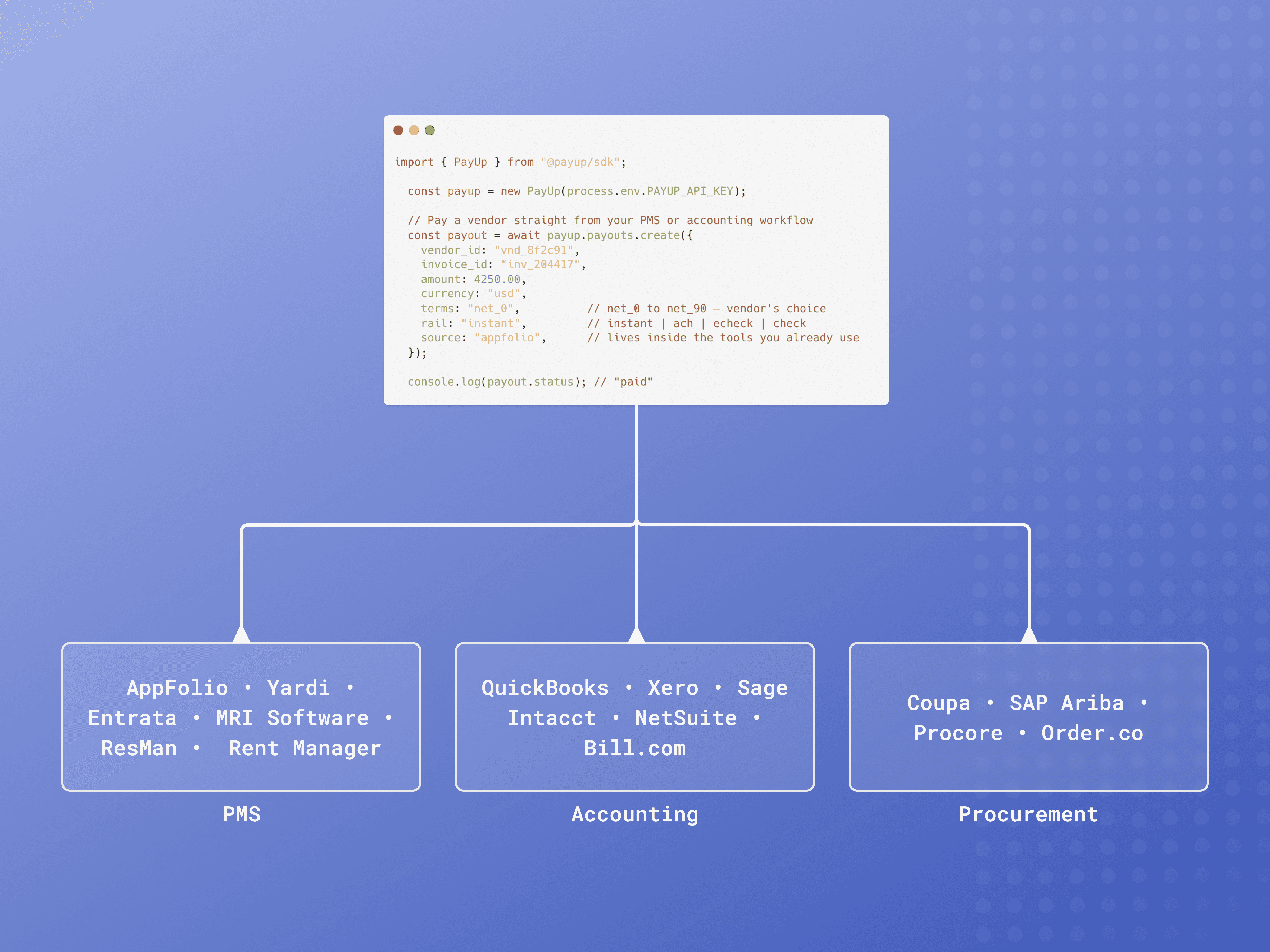
Even a great standalone product asks businesses to leave the tools they already run on, and in this industry payments tended to live beside the workflow rather than inside it. Monico helped design APIs that dropped PayUp's payment rails straight into the procurement, accounting, and PMS software companies already used, so finance happened where the work was already being managed. The hard part was making genuinely complex infrastructure (multi-rail payments, vendor onboarding, instant verification) feel simple on both sides of the transaction, whether a business was paying through its own software or a vendor was getting paid through the app.
Banking the vendors everyone else ignored
PayUp pushed past payments into Banking as a Service (BaaS), one of the earliest fintechs to do so, giving service-industry workers digital bank accounts alongside faster payouts. The goal was as much social as commercial: bring unbanked and underbanked workers, the people who keep the service economy running, into the financial system with tools built for how they actually earn and spend.
Outcomes
0 → $1M ARR in two years. Grew from a one-page concept into a revenue-generating platform, processing $2M in payments in Year 1 and scaling to $10M across 75 properties and 1,000 vendors by Year 2.
$100M in financial-partner contracts. Signed agreements with financial partners and raised a $5M credit facility from non-bank partners, plus half a million in debt financing, to fund vendor payouts at scale.
Distribution through the industry's largest rails. Secured integration with one of the largest property-management software platforms, opening access to 1,000+ property management companies and $4.5B+ in annual vendor payments.
Product expansion on shared infrastructure. PayUp's rails became a foundation others could build on, including a rental-payments app that reached $10M in monthly volume and $100M in total volume within its first year.
Financial access, not just speed. The Stripe Treasury and Card Issuing pilot brought digital bank accounts and faster payouts to underbanked service workers, widening who the financial system actually serves.